
Many Malaysian companies are aware that they need to maintain Beneficial Ownership (BO) information. However, understanding the requirements and implementing them correctly are two very different challenges.
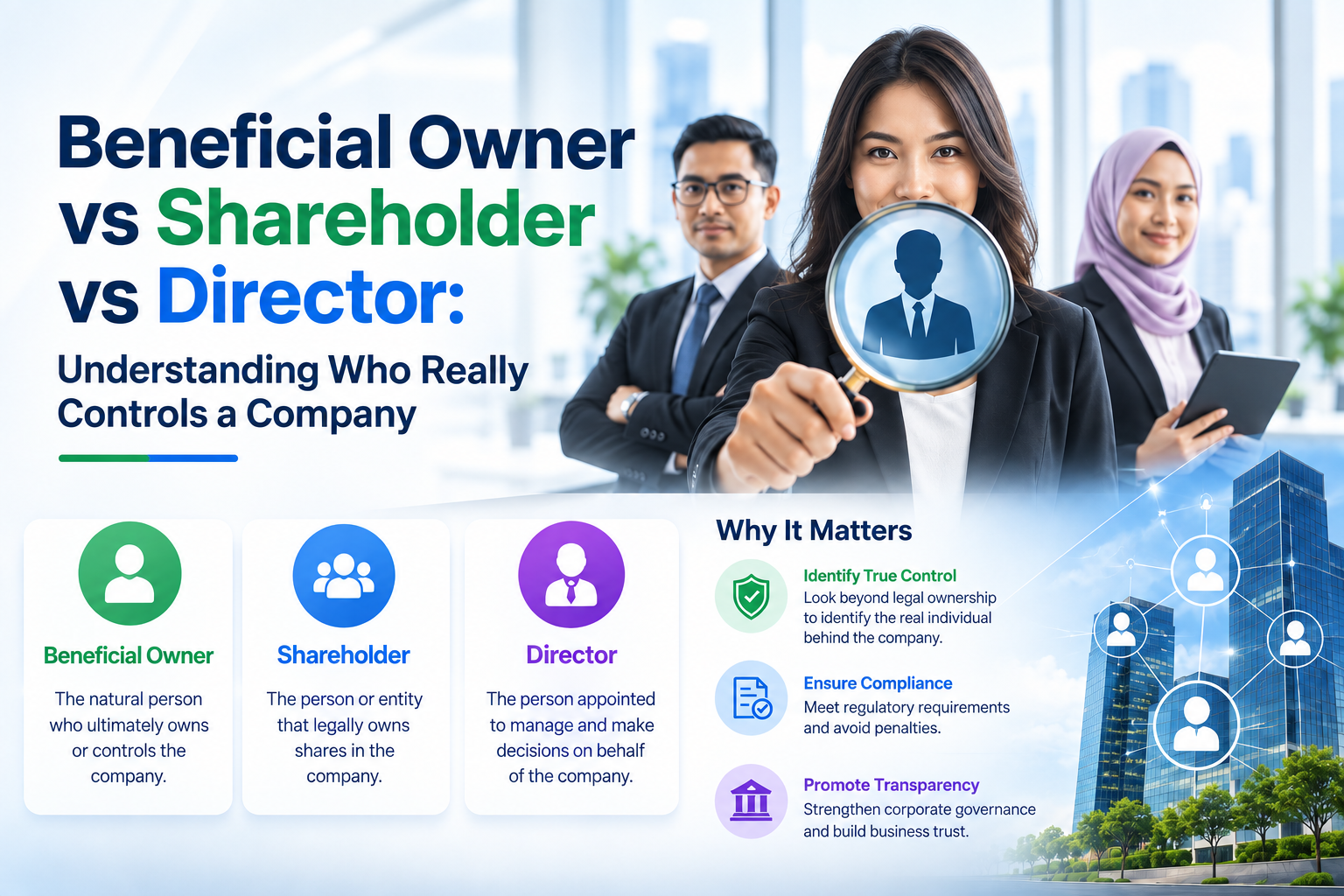
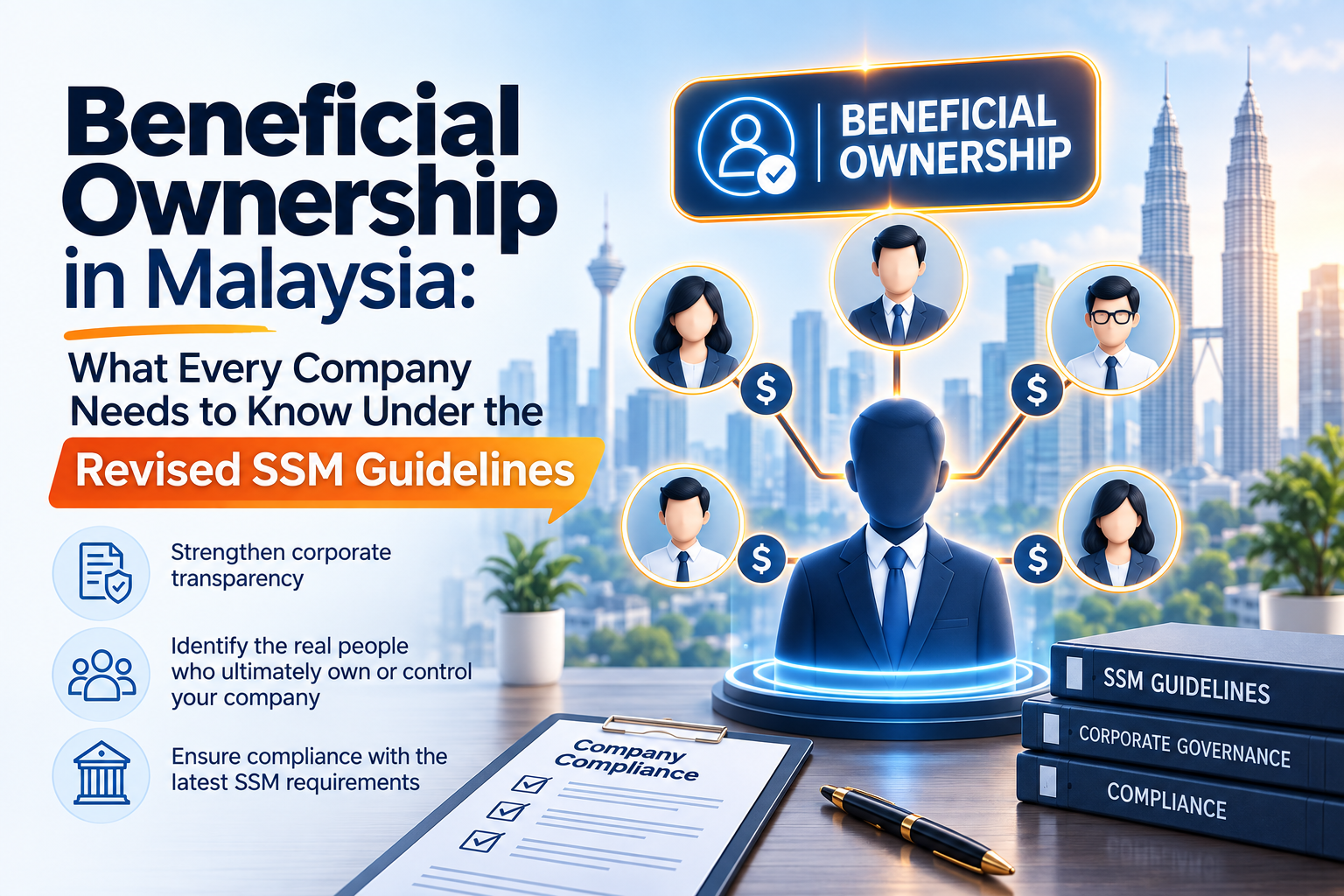
With the revised SSM Beneficial Ownership Guidelines, businesses are expected to identify the individuals who ultimately own or control the company—not merely those listed in the share register.
In practice, company secretaries and tax agents are increasingly encountering challenges when helping clients comply with these requirements.
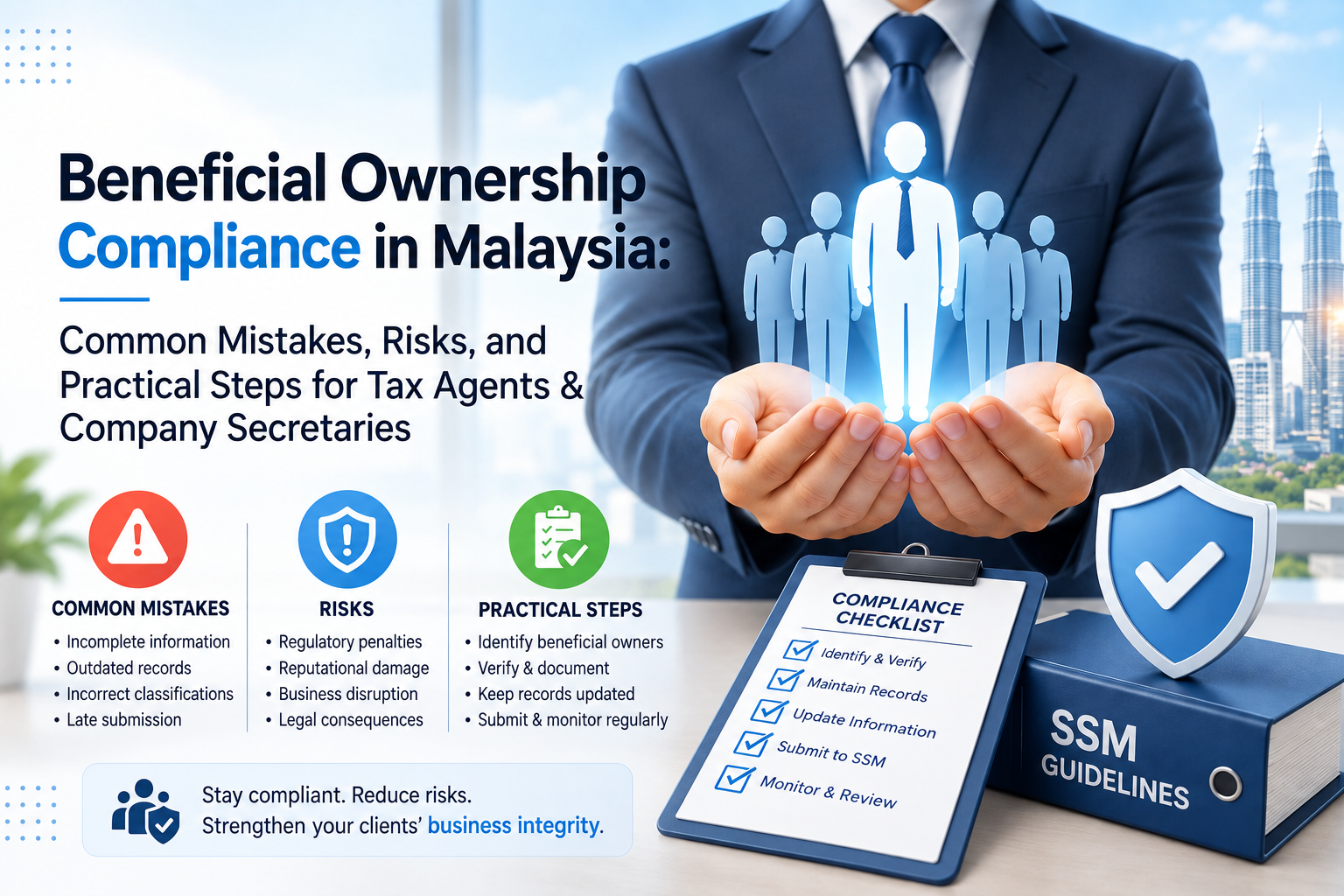
In this article, we explore the most common BO compliance mistakes, the practical issues faced by tax professionals, the risks of non-compliance, and the steps professionals can take to improve compliance.
Common Beneficial Ownership Mistakes Companies Make
1. Assuming Shareholders Are Automatically the Beneficial Owners
One of the most common misconceptions is that every registered shareholder is the Beneficial Owner.
This may not be the case where shares are held through:
- nominee arrangements;
- corporate shareholders;
- family members;
- trusts; or
- other indirect ownership structures.
Companies should always determine who ultimately exercises ownership or effective control.
2. Treating the 20% Threshold as the Only Test
Many businesses believe that anyone owning less than 20% of the shares cannot be a Beneficial Owner.
In reality, the 20% threshold is only one indicator.
An individual may still qualify as a Beneficial Owner if they exercise significant influence through voting arrangements, contractual rights, financing arrangements, or decision-making authority.
3. Not Reviewing BO Information After Corporate Changes
Beneficial Ownership is not a one-time exercise.
Companies often forget to review BO information after:
- transfer of shares;
- appointment or resignation of directors;
- changes in holding companies;
- restructuring exercises;
- mergers or acquisitions; or
- shareholder agreements.
Without regular reviews, the Register of Beneficial Owners may become outdated.
4. Relying Solely on Client Declarations
Many companies simply record whatever information the shareholders provide.
However, companies are expected to take reasonable steps to identify and verify their Beneficial Owners.
Where ownership structures are complex, further enquiries may be necessary.
5. Poor Documentation
Even where the correct Beneficial Owner has been identified, many companies fail to maintain sufficient supporting documentation explaining how that conclusion was reached.
Good documentation demonstrates that reasonable steps were taken and helps support the company’s compliance position during reviews or inspections.
Common Problems Faced by Tax Agents
Although Beneficial Ownership reporting is primarily governed under company law, tax agents frequently encounter BO-related issues during tax engagements.
Some common challenges include:
– Clients do not understand the concept
Many business owners assume the shareholder listed in the Companies Commission records is automatically the Beneficial Owner. Explaining indirect ownership structures often requires additional discussions.
– Incomplete ownership information
Tax agents may receive incomplete organisation charts or shareholder details, making it difficult to understand the actual ownership chain.
– Frequent ownership changes
Changes in shareholders, directors, or group structures are not always communicated promptly. This creates inconsistencies between corporate records and the information used during tax compliance work.
– Cross-border ownership structures
Foreign holding companies, overseas investors, and multi-layer corporate structures often require additional analysis before the actual Beneficial Owner can be determined.
– Different advisers holding different information
The company secretary, auditor, tax agent, and legal adviser may each possess different pieces of information. Without proper coordination, inconsistencies can arise.
Compliance Risks of Incorrect BO Reporting
Failure to maintain accurate Beneficial Ownership information may expose companies to several risks.
1. Regulatory Risk
Companies may fail to meet their statutory obligations under the Companies Act and the Beneficial Ownership reporting framework.
2. Governance Risk
Incorrect BO information affects transparency and may weaken corporate governance practices.
3. Due Diligence Risk
Banks, investors, regulators, and business partners increasingly request Beneficial Ownership information during onboarding and compliance reviews.
Incorrect records may delay transactions or raise additional questions.
4. Reputational Risk
Poor compliance practices can affect stakeholder confidence and create unnecessary scrutiny during regulatory reviews.
Practical Steps for Tax Agents & Company Secretaries
Beneficial Ownership compliance should not be viewed as an annual filing exercise. Instead, it should form part of an ongoing governance process. Professionals can assist clients by adopting the following practices.
– Maintain an Updated Ownership Structure
Review ownership charts regularly to ensure they reflect current corporate arrangements.
– Review BO Information After Every Corporate Change
Whenever there is a change involving shareholders, directors, or corporate restructuring, reassess whether the Beneficial Owner has changed.
– Ask the Right Questions
Instead of asking only:
“Who owns the shares?”
also ask:
- Who ultimately controls the company?
- Does anyone exercise significant influence?
- Are there nominee arrangements?
- Are there shareholder agreements affecting control?
– Keep Supporting Documentation
Maintain records showing how the Beneficial Owner was identified, including ownership charts, declarations, organisational structures, and supporting documents.
– Work Closely with Other Professional Advisers
Company secretaries, tax agents, auditors, and legal advisers should communicate regularly to ensure everyone is working from consistent and up-to-date Beneficial Ownership information.
Final Thoughts
Beneficial Ownership compliance is no longer simply about maintaining a statutory register.
It requires companies to understand their ownership structure, assess who ultimately exercises control, and keep that information accurate as the business evolves.
For tax agents and company secretaries, this presents an opportunity to provide greater value by helping clients strengthen governance, improve transparency, and reduce compliance risks.
Taking proactive steps today can help businesses avoid unnecessary issues during regulatory reviews and build greater confidence among regulators, financial institutions, and other stakeholders.
Disclaimer: This article is intended for general informational purposes only and should not be regarded as legal or professional advice. Readers should refer to the latest SSM Beneficial Ownership Guidelines and seek professional advice where necessary.