
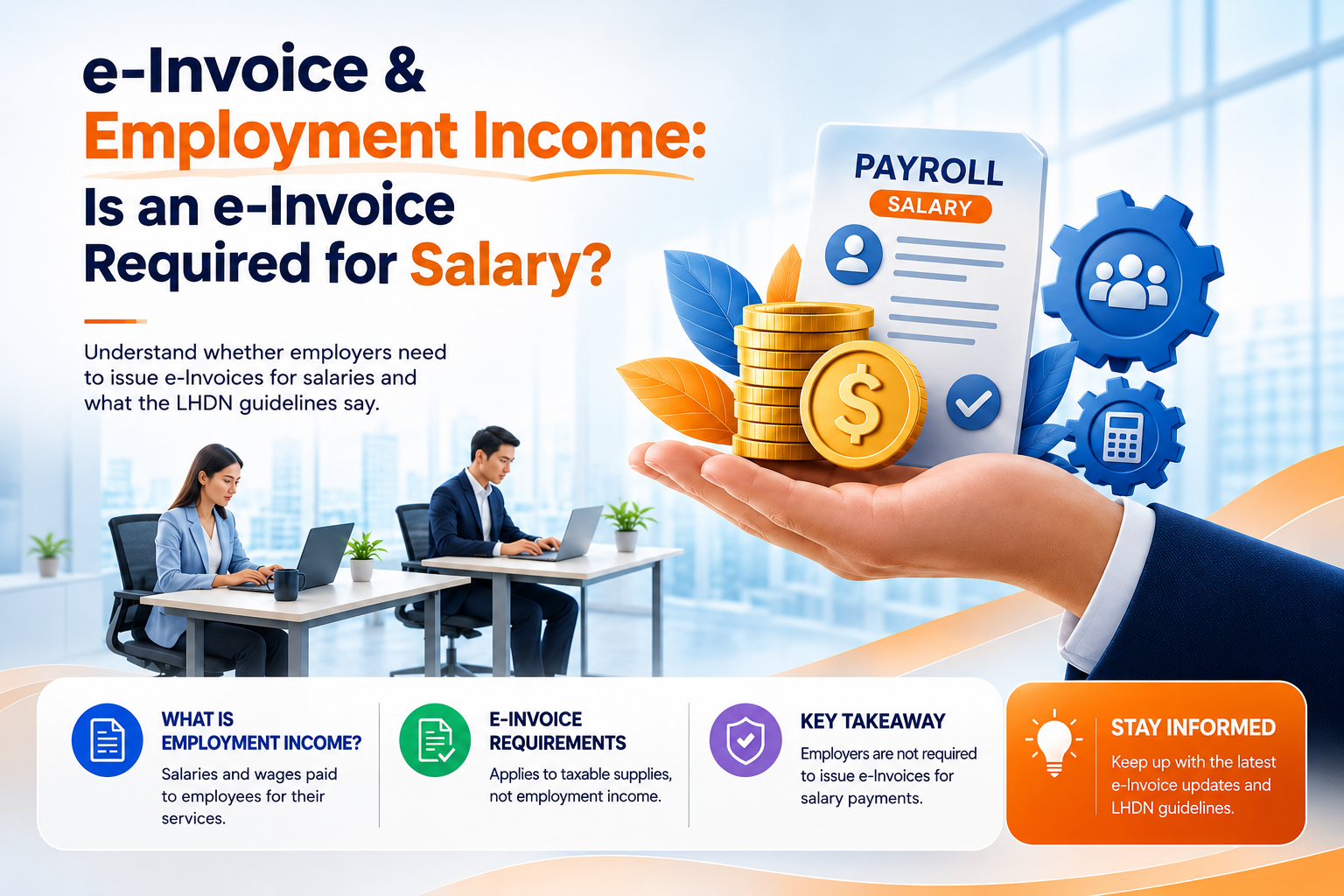

With the implementation of e-Invoice in Malaysia, employers may wonder whether they are required to issue e-Invoices for payments made to their employees.
The good news is that e-Invoice is not required for employment income.
What is considered employment income?
Employment income generally includes payments made to an employee arising from their employment, such as:
- Salary and wages
- Overtime payments
- Bonus and incentives
- Commissions
- Allowances
- Other remuneration arising from employment
For these types of employment income, employers do not need to issue an e-Invoice to the employee.
What about employee reimbursements?
Employers should be more careful when dealing with expenses paid by employees on behalf of the company.
A reimbursement is not automatically treated as employment income. The e-Invoice treatment may depend on the nature of the transaction and whether the expense was incurred on behalf of the employer.
Therefore, employers should distinguish between:
Employment income
Salary, bonus, allowances and other remuneration arising from employment → No e-Invoice required.
Business expenses / reimbursements
Expenses incurred by an employee on behalf of the company → Separate e-Invoice considerations may apply.
Payments to non-employees
Payments made to freelancers, independent contractors or consultants → May be subject to e-Invoice requirements, depending on the circumstances.
What should employers do?
Employers should review their payment processes and classify payments correctly.
In particular, businesses should avoid assuming that every payment made to an individual is “employment income”. The relationship between the payer and recipient, as well as the nature of the payment, should be considered.
Key takeaway
Salary does not require an e-Invoice.
However, employers should still review other payments made to employees and individuals to determine whether they fall under employment income or are subject to separate e-Invoice requirements.
Understanding the distinction can help businesses avoid unnecessary e-Invoice issuance while ensuring that transactions that are subject to e-Invoice are properly accounted for.
Businesses should refer to the latest IRBM e-Invoice Guidelines and Specific Guidelines for the detailed treatment applicable to their circumstances.